
Where to begin to describe a walk through so many churches, so many prayers, so many people?
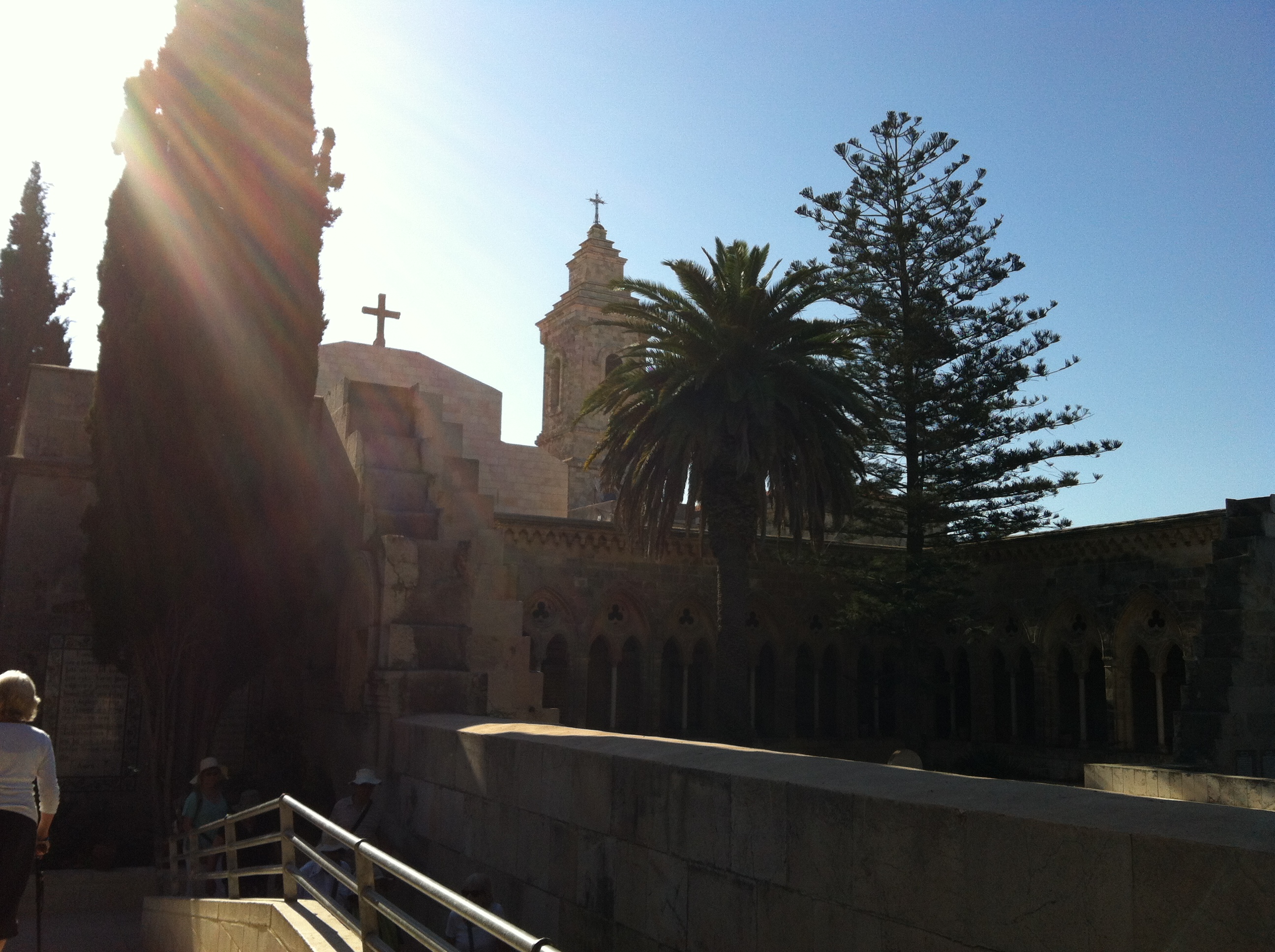
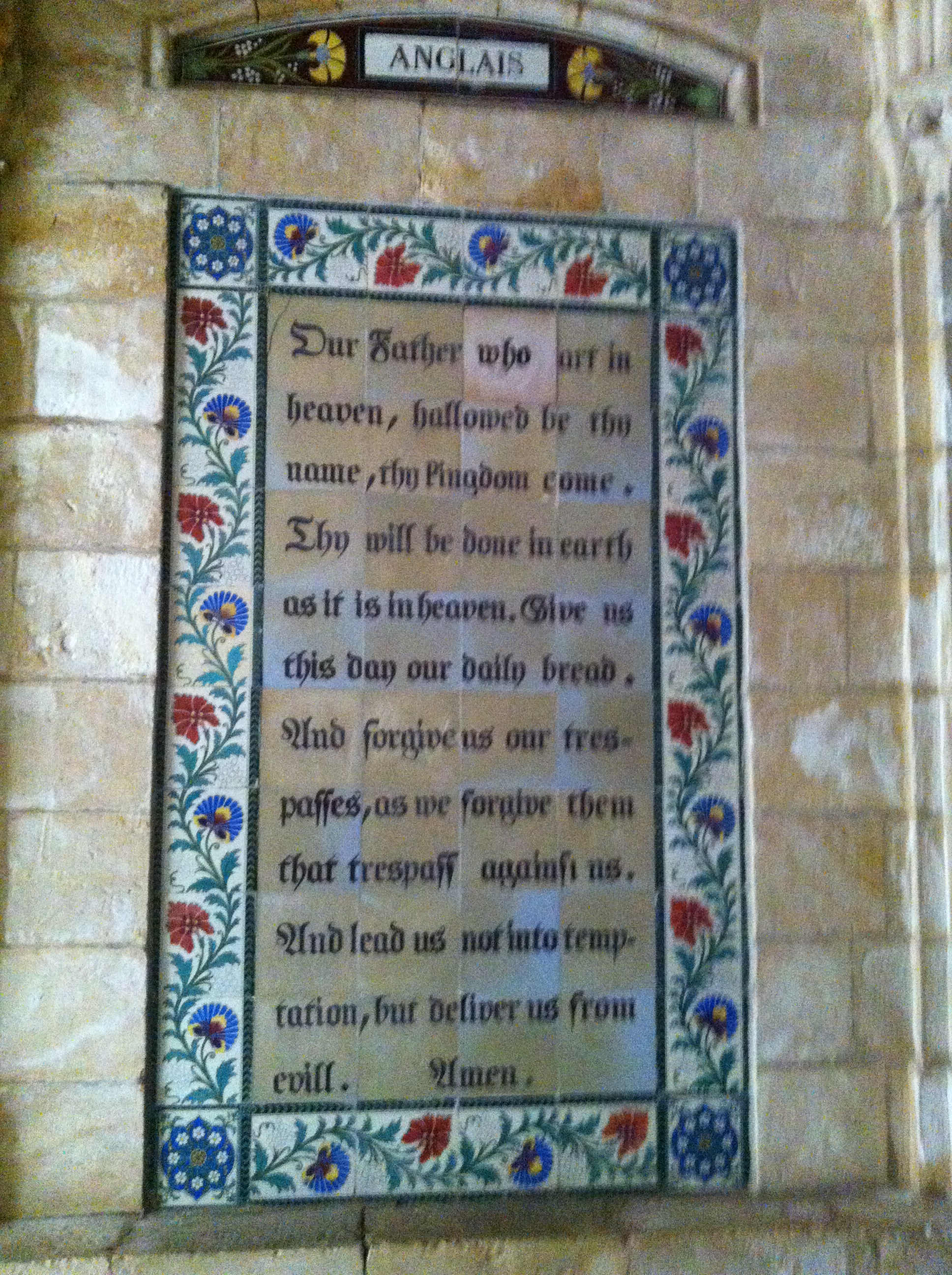
We began pilgrimage this morning at the Paternoster church. The fragrance of roses, the hibiscus blooms, gardens all around provide a setting for the tiled illuminations of the Lord’s Prayer in 140 languages, some no longer spoken.
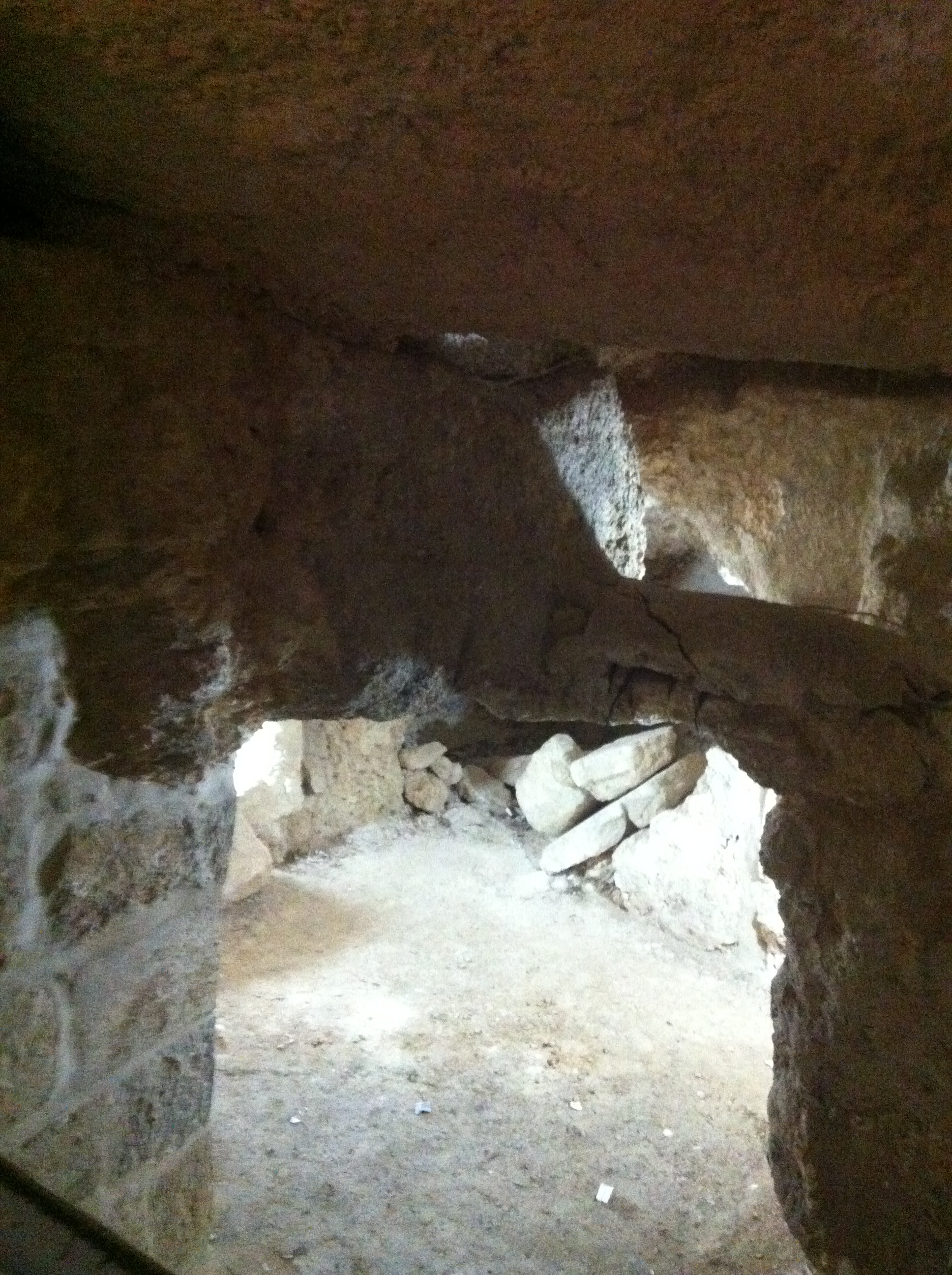
Inside – the remains of a cave – were Jesus and his disciples ever there?
Does it matter when the stones were there in His time close to this place where He was presented, learned, entered in triumph, prayed, was betrayed and taken prisoner, was tried and by order of the crowd sentenced to death, carried his cross, was crucified, died, was placed in a tomb and was resurrected? Does it matter exactly where? What matters is that we remember, pray in our turn and pass on his teaching. That we are drawn to Jerusalem as He was and that we share this holy place with others who venerate it, in peace.
Then we descended the Mount of Olives on foot, reaching the Dominus Flavit church by 9am. Setting up an altar in the open next to the busy church, we celebrated the Eucharist and focused on the Gospel from Luke 19:36-44 which I was privileged to read: As he approached Jerusalem, he saw the city, and wept over it…
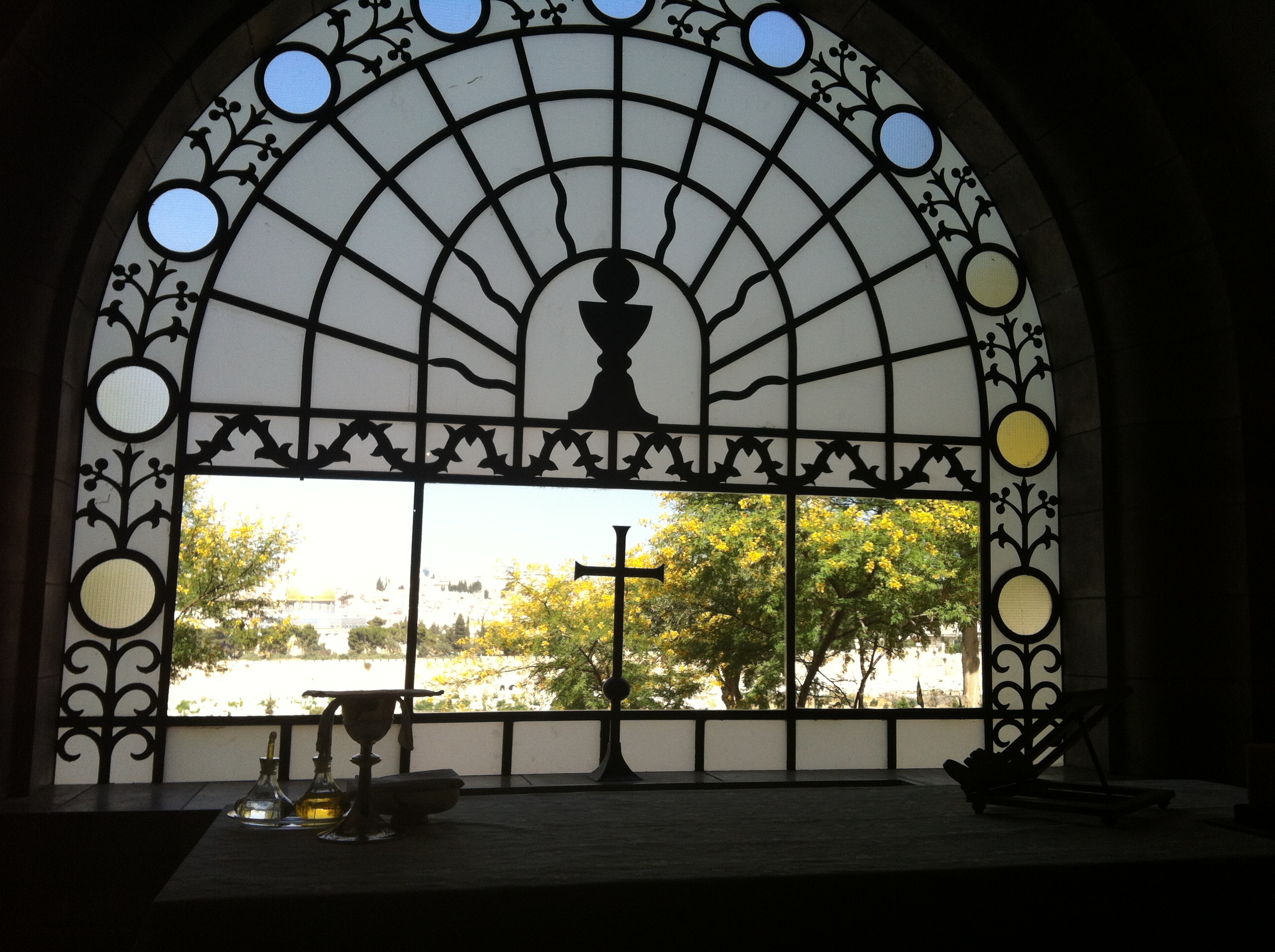
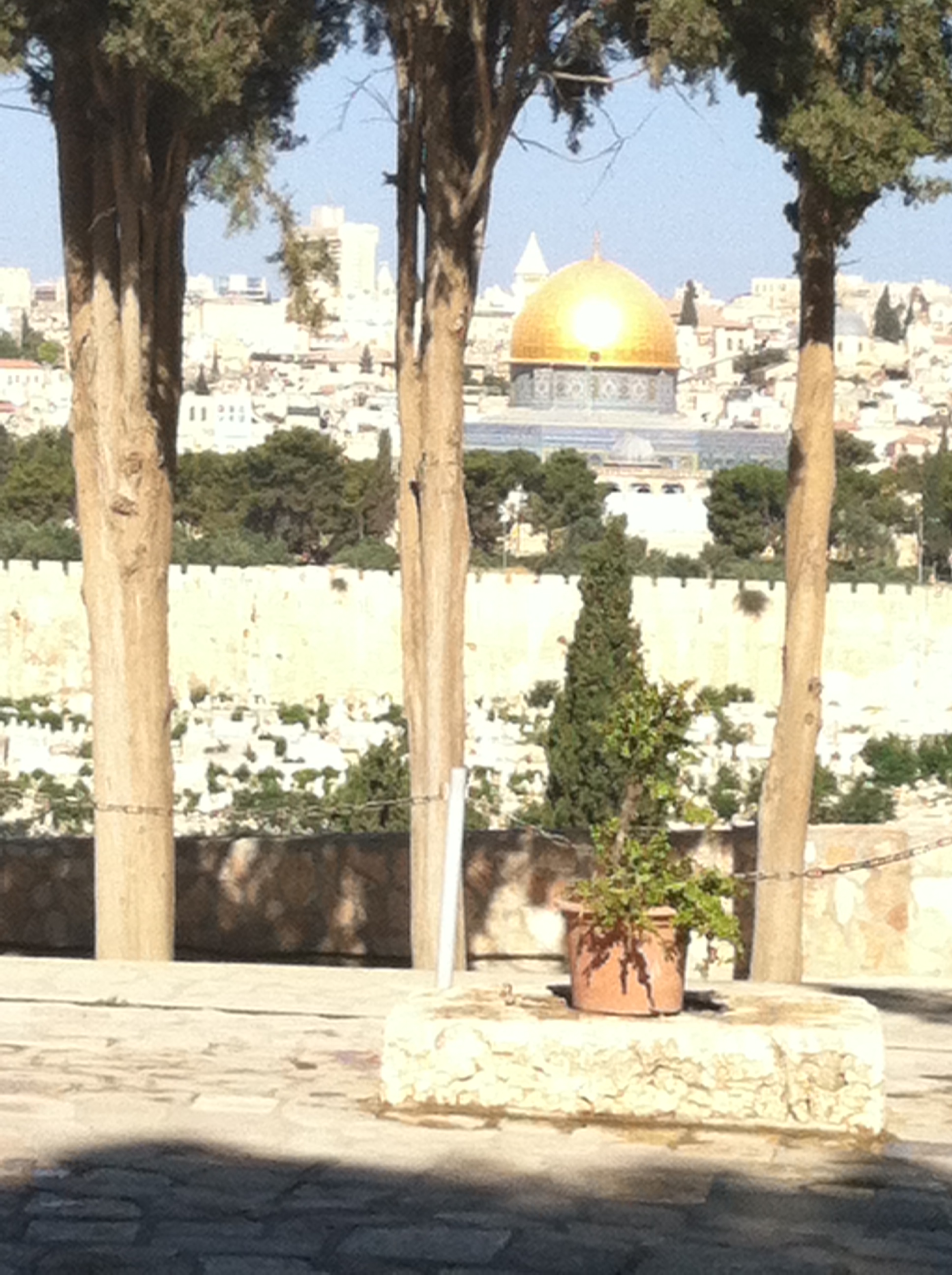
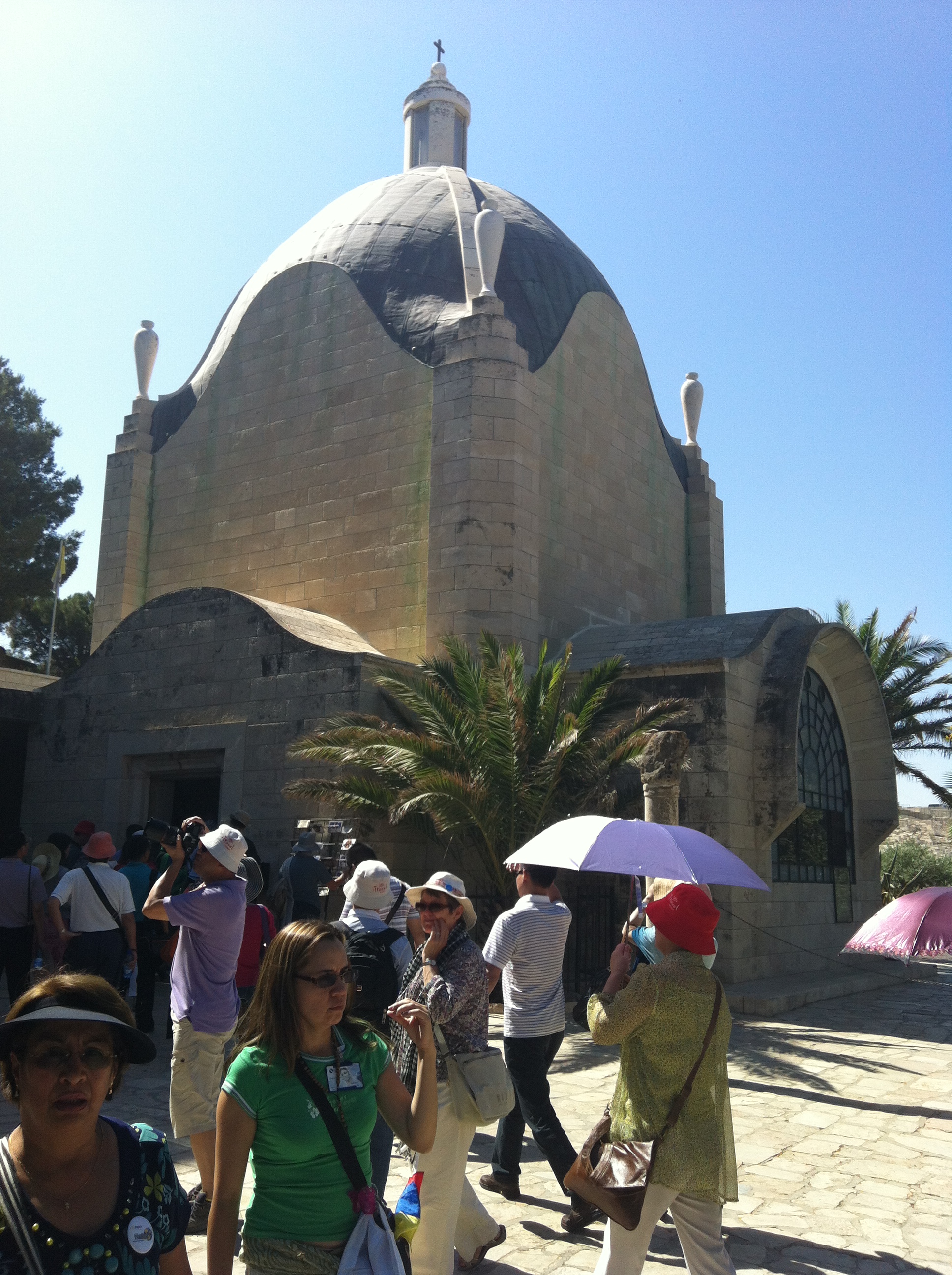
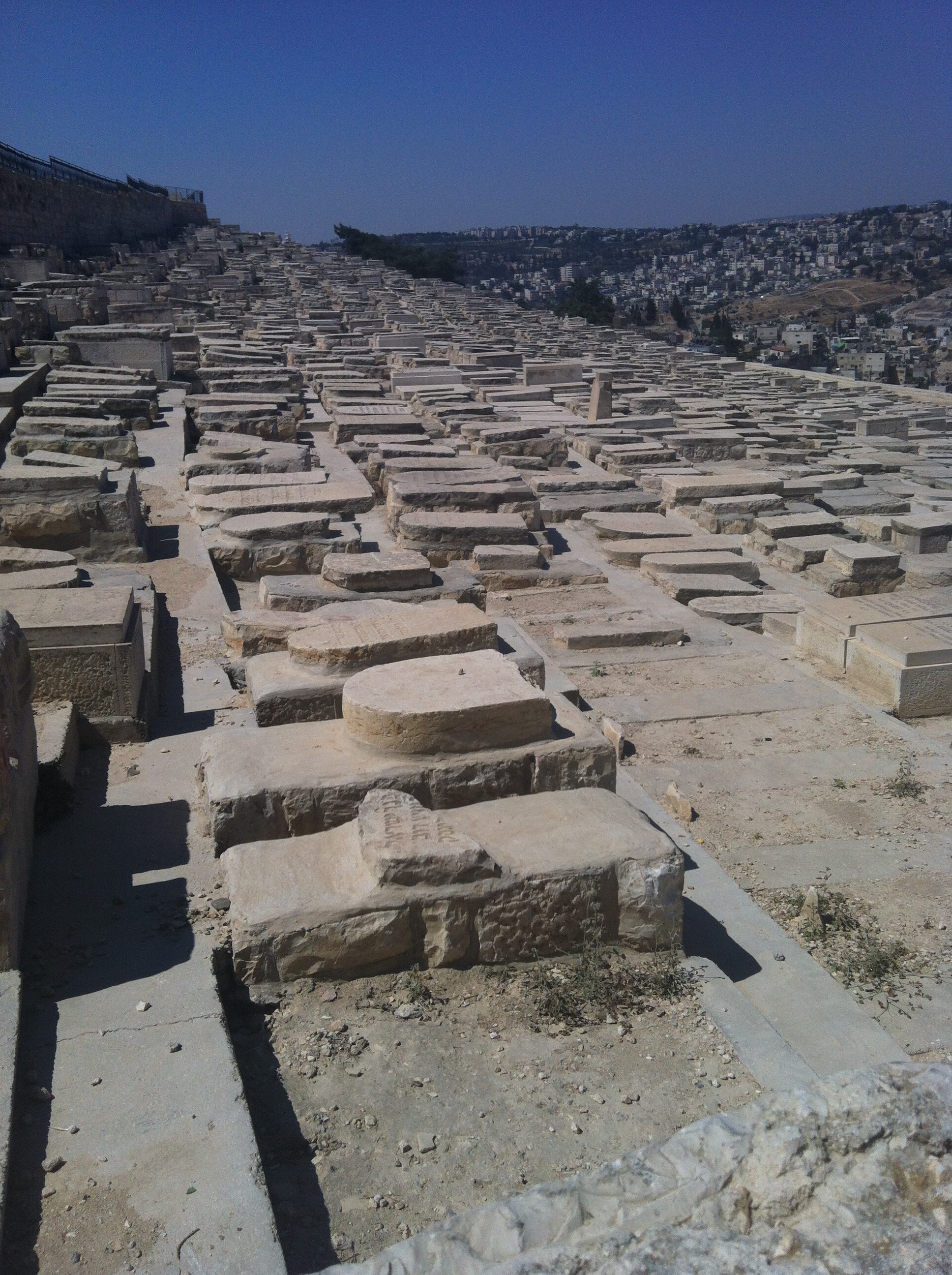
It was moving to speak the words of the Eucharist on the Mount of Olives, with Jerusalem spread out before us. To listen closely to thousands of years of history in this place, with the domes solid and real across the valley and the ranks of tombs like an army on the slopes, awaiting the arrival if Jesus through the Golden or Beautiful Gate.
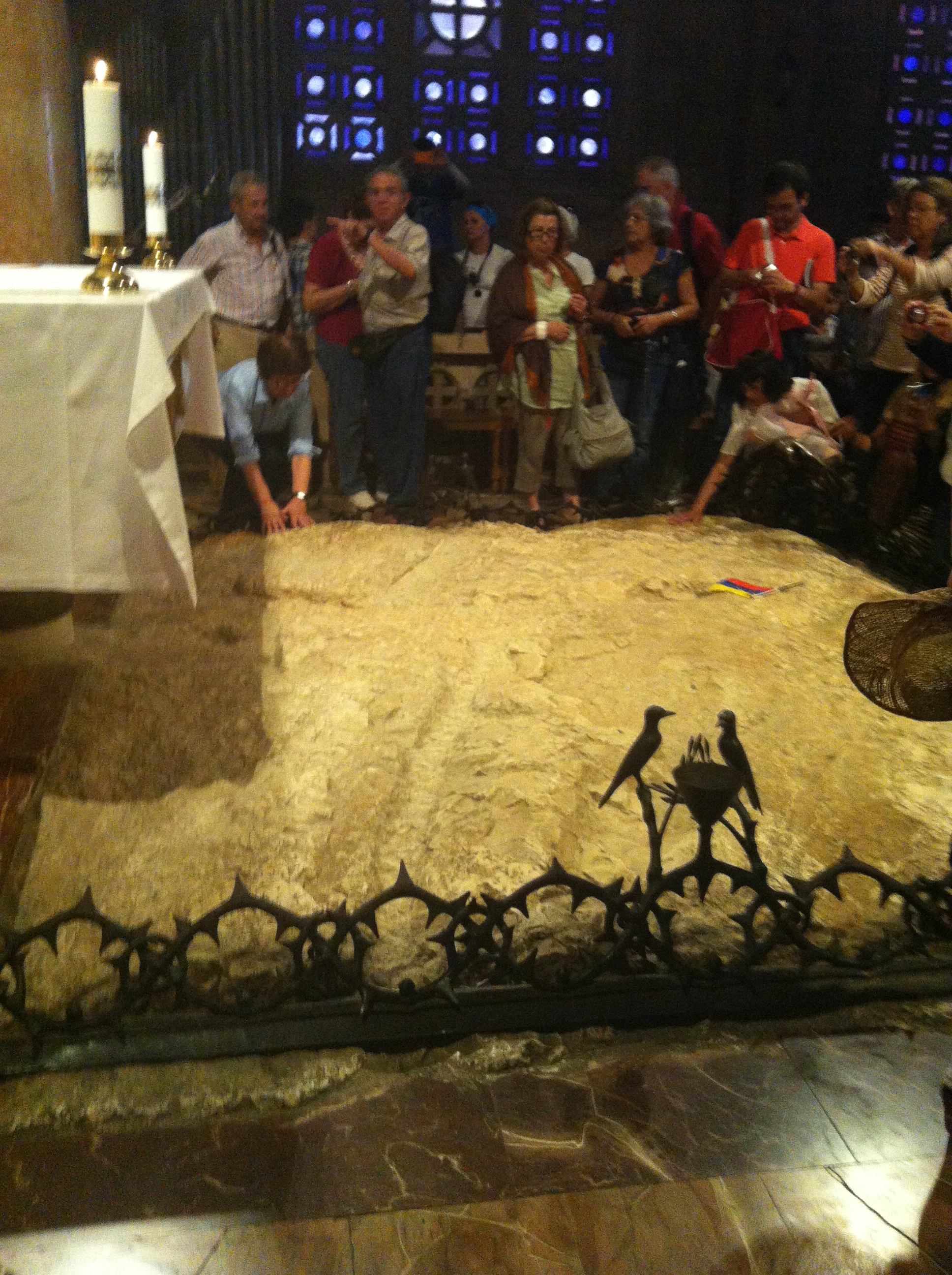
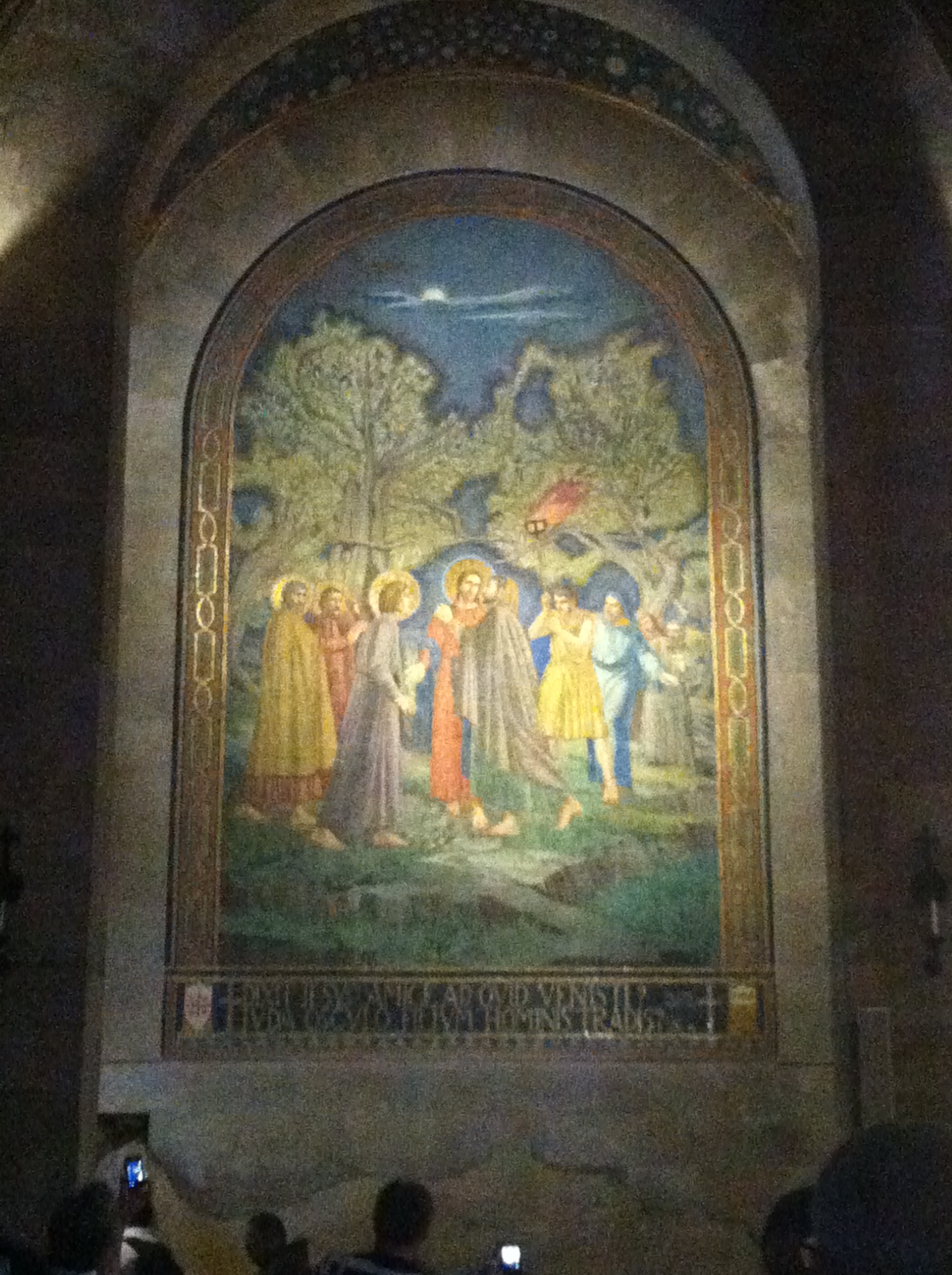
We went on to the Church of all Nations beside the Garden of Gethsemane. A mass was being said in Spanish as we entered, the rock exposed before the altar, said to be where Jesus prayed, and above – high on the walls of the dark church, floodlit mosaics of Judas’ kiss in the Garden, and of Jesus in prayer with his disciples sleeping.
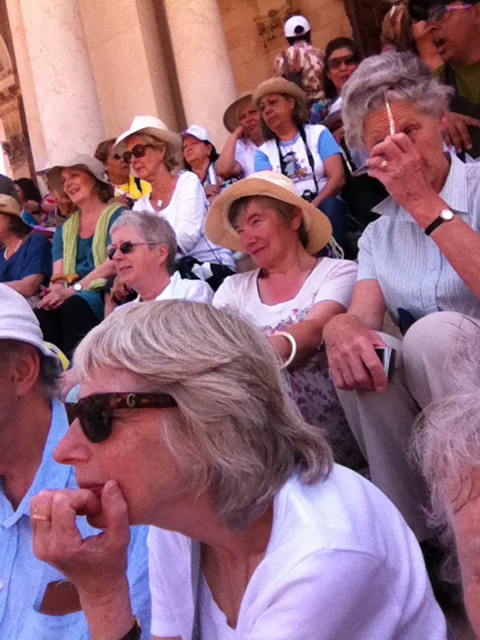
We sat on the crowded steps outside and listened to a Bible reading from Liz, then sang the hymn Be Still but strongly, to be heard above the hubbub of tourists like ourselves with so little time at so important a place.
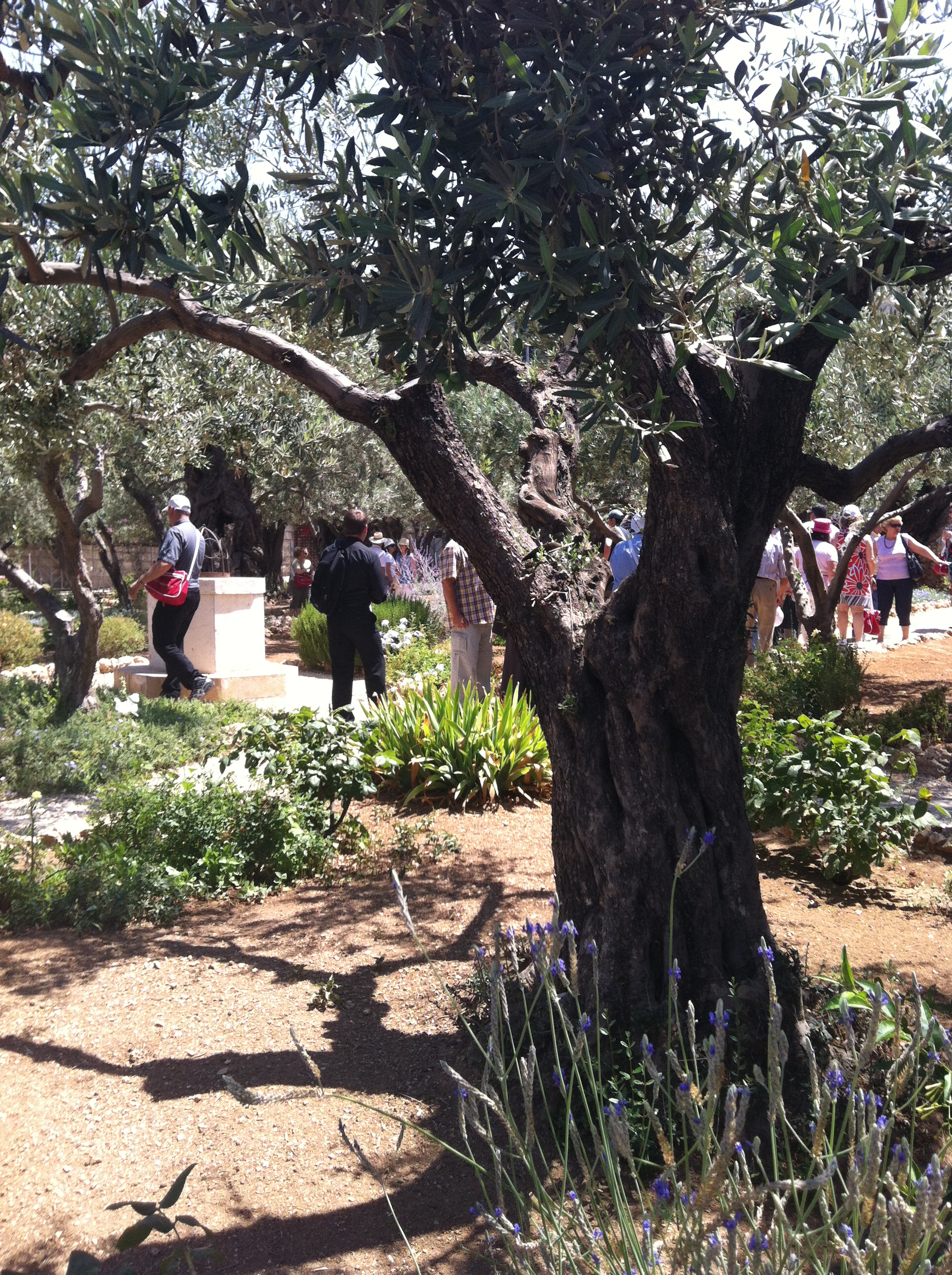
Past the olive trees of the commemoration of Gethsemane,
then up to Saint Stephen’s Gate into the ancient city through the 15th century walls erected by Suleiman the Magnificent. Our first stop was St Annes church – the mother of Mary- said to be over the birthplace of Mary. A beautiful tall and plain church with wonderful acoustic.
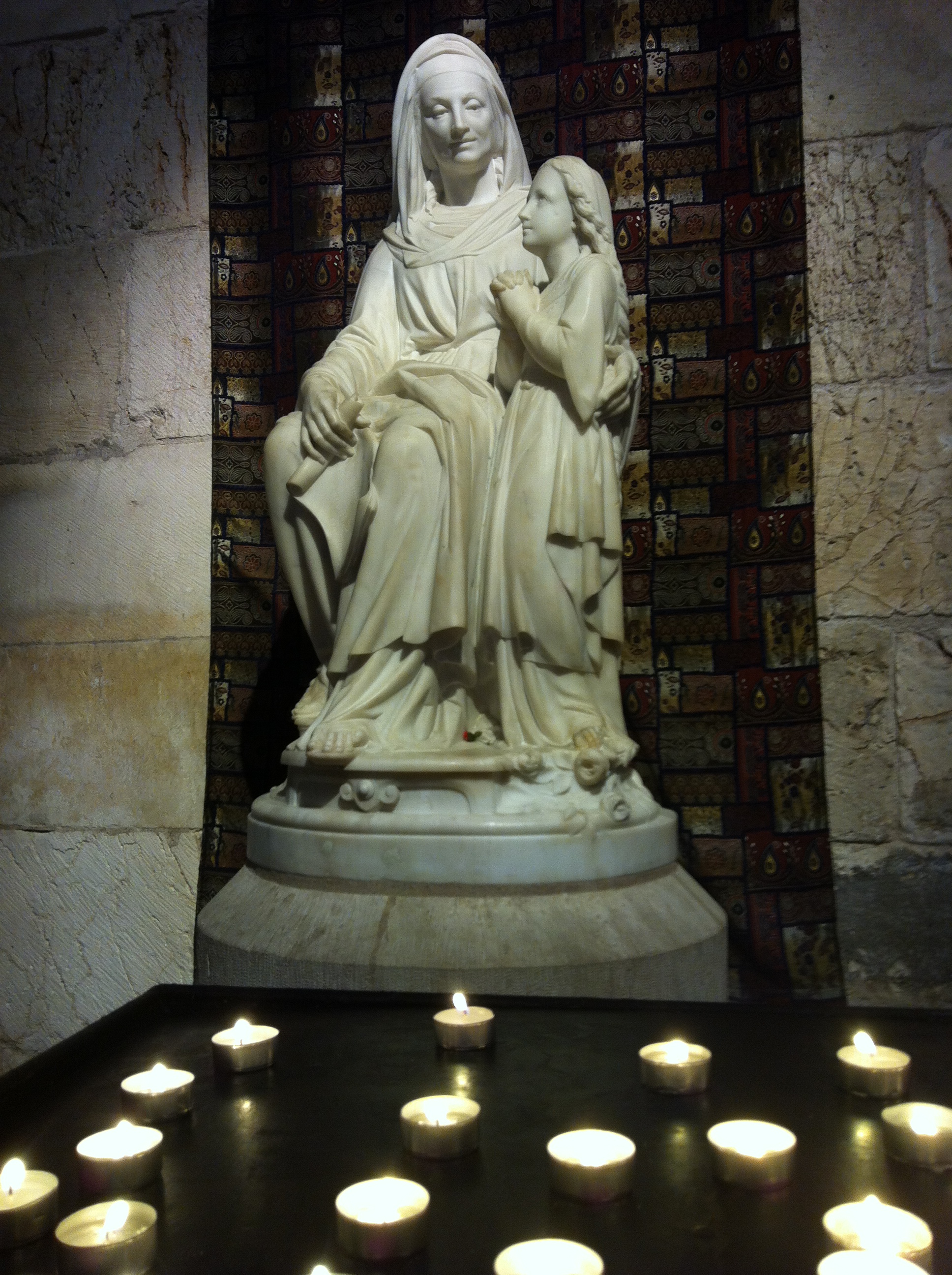
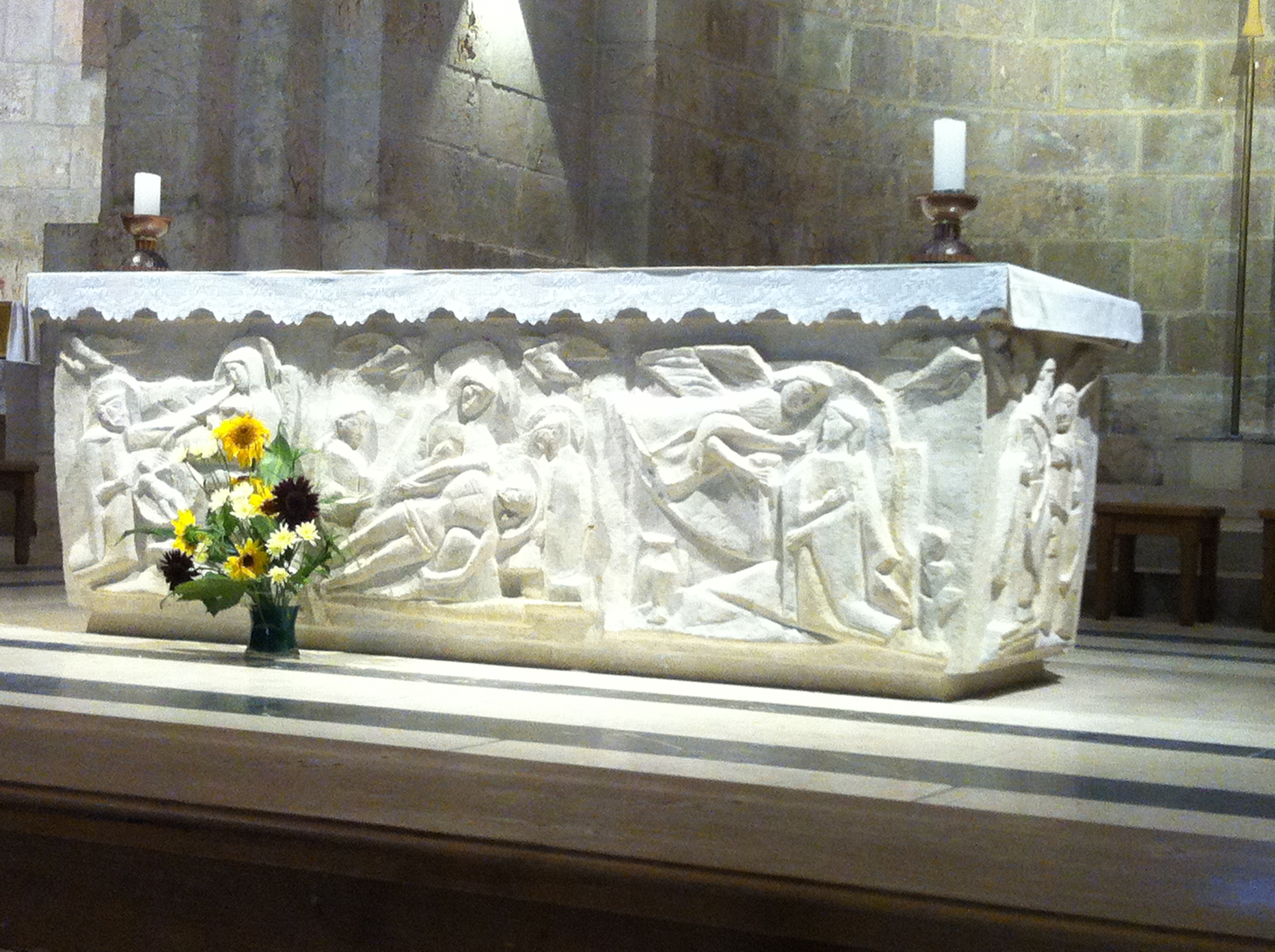
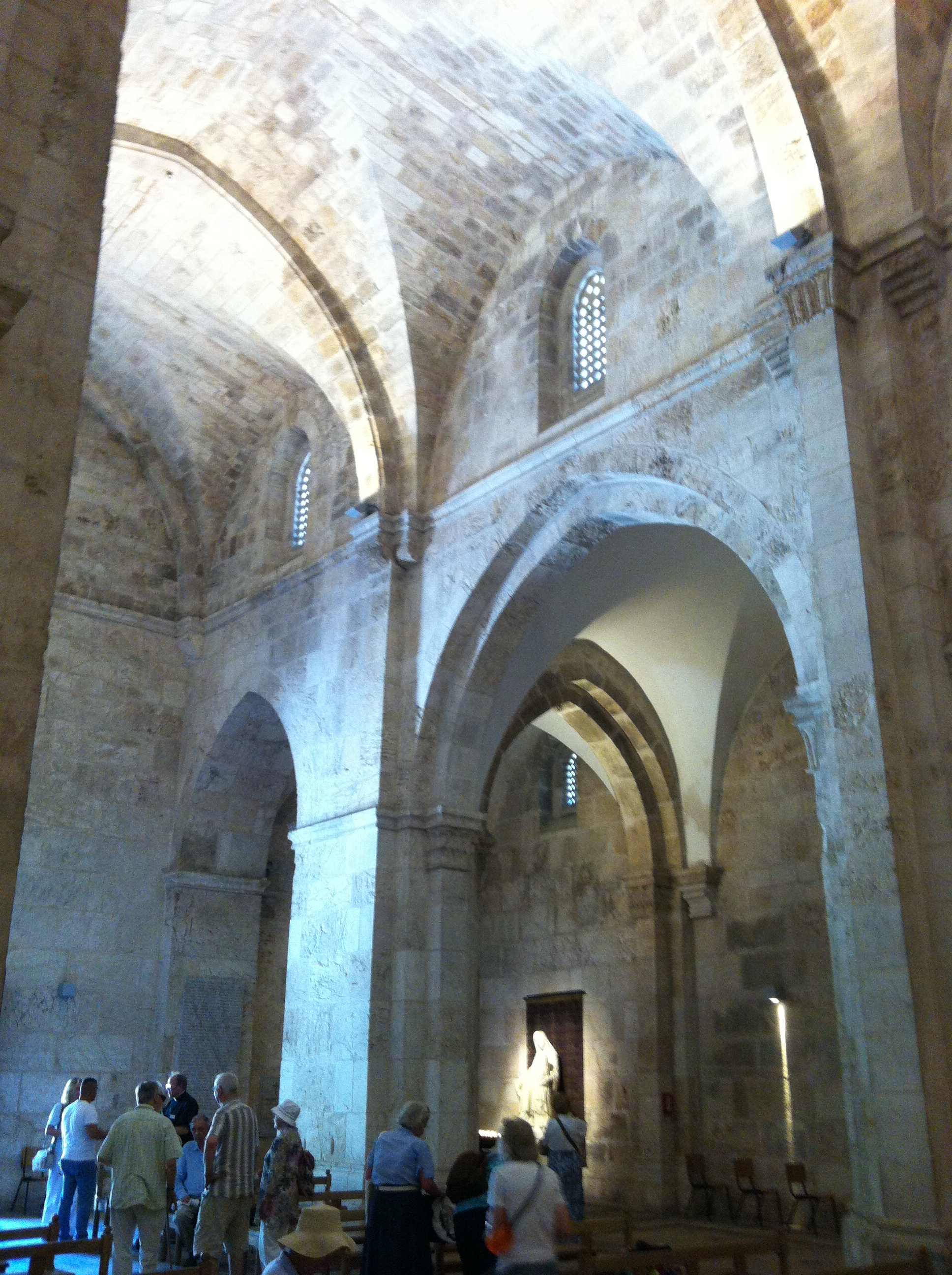
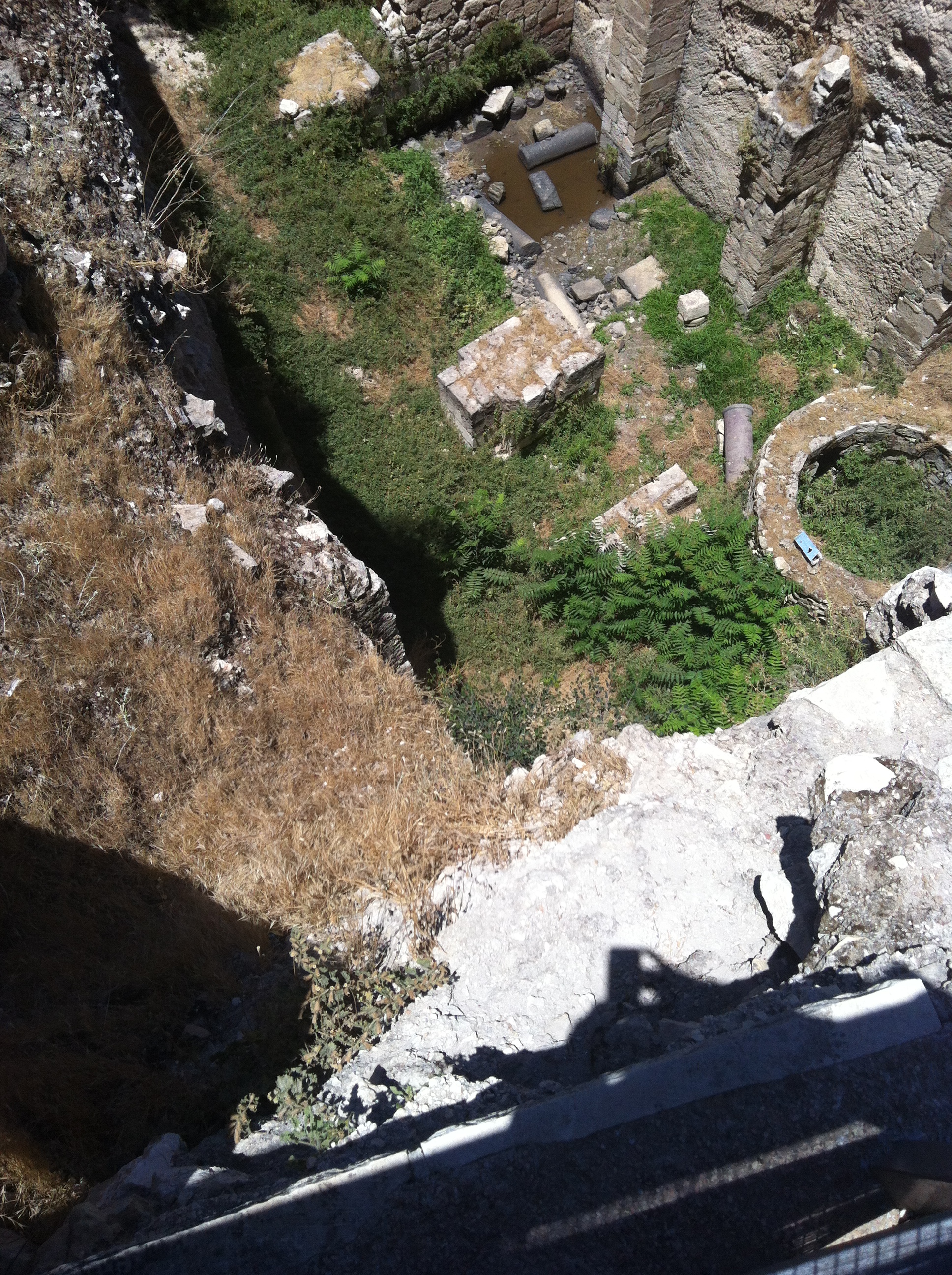
We sang a hymn but it was tempting to continue to chant, the church made you want to sing. A further reading from Liz as we found by the church the pool of Bethesda where Jesus had healed an invalid of 38 years on the Sabbath.
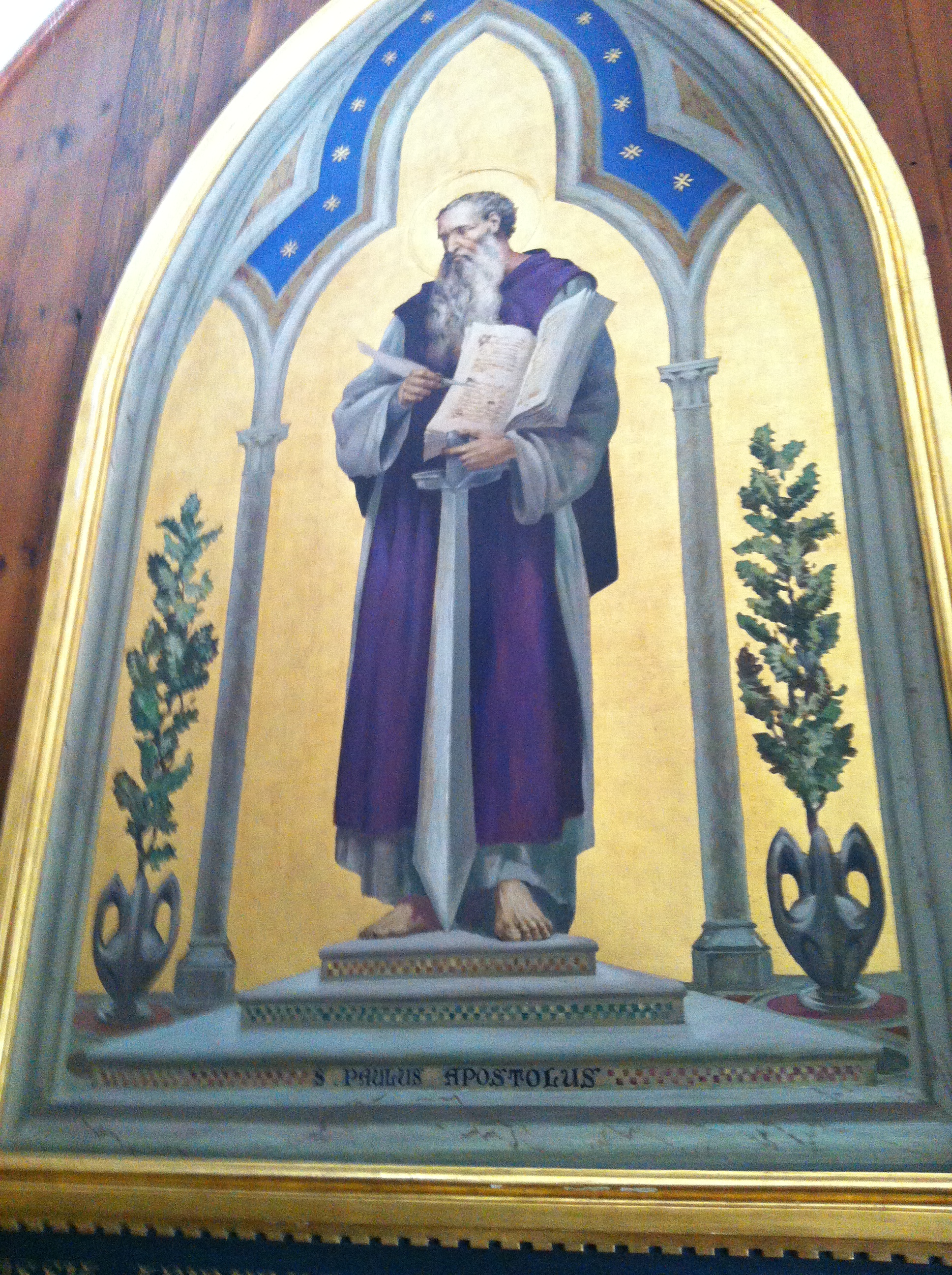
Then along the via Dolorosa to the church of flagellation – on the apparent site where Herod was to celebrate the Passover. They brought Jesus to him and by custom he offered the crowd Jesus life which they rejected in favour of Barabbas. Liz again read to us this Biblical passage within the dark small church flanked by beautiful paintings of St Paul and St Francis.
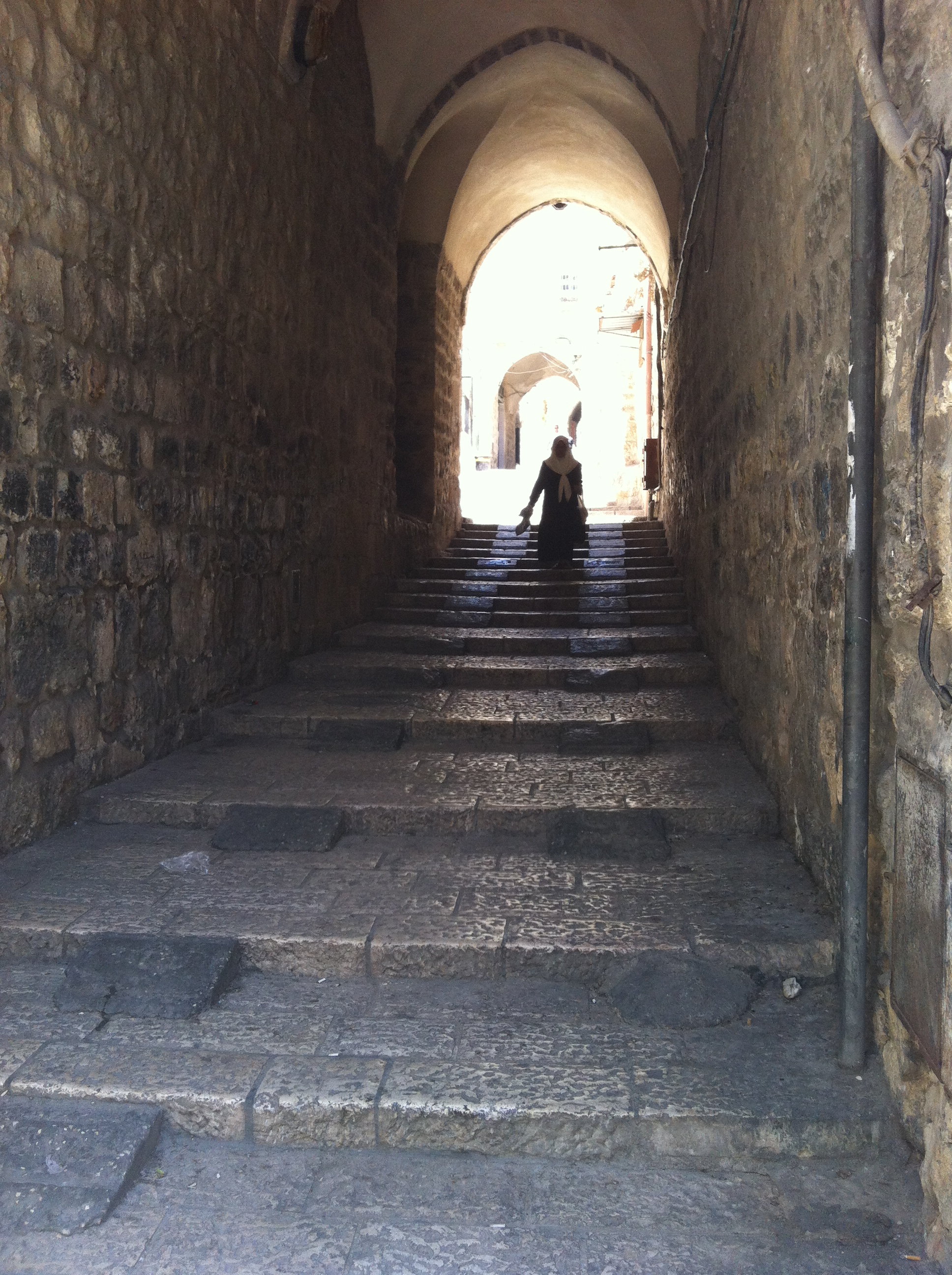
We moved on to a place of shade, calm and cleanliness in the Ecce Homo convent for a restoring meal among kind and hospitable people.
Then we plunged into the violent market atmosphere of the remaining length of Via Dolorosa
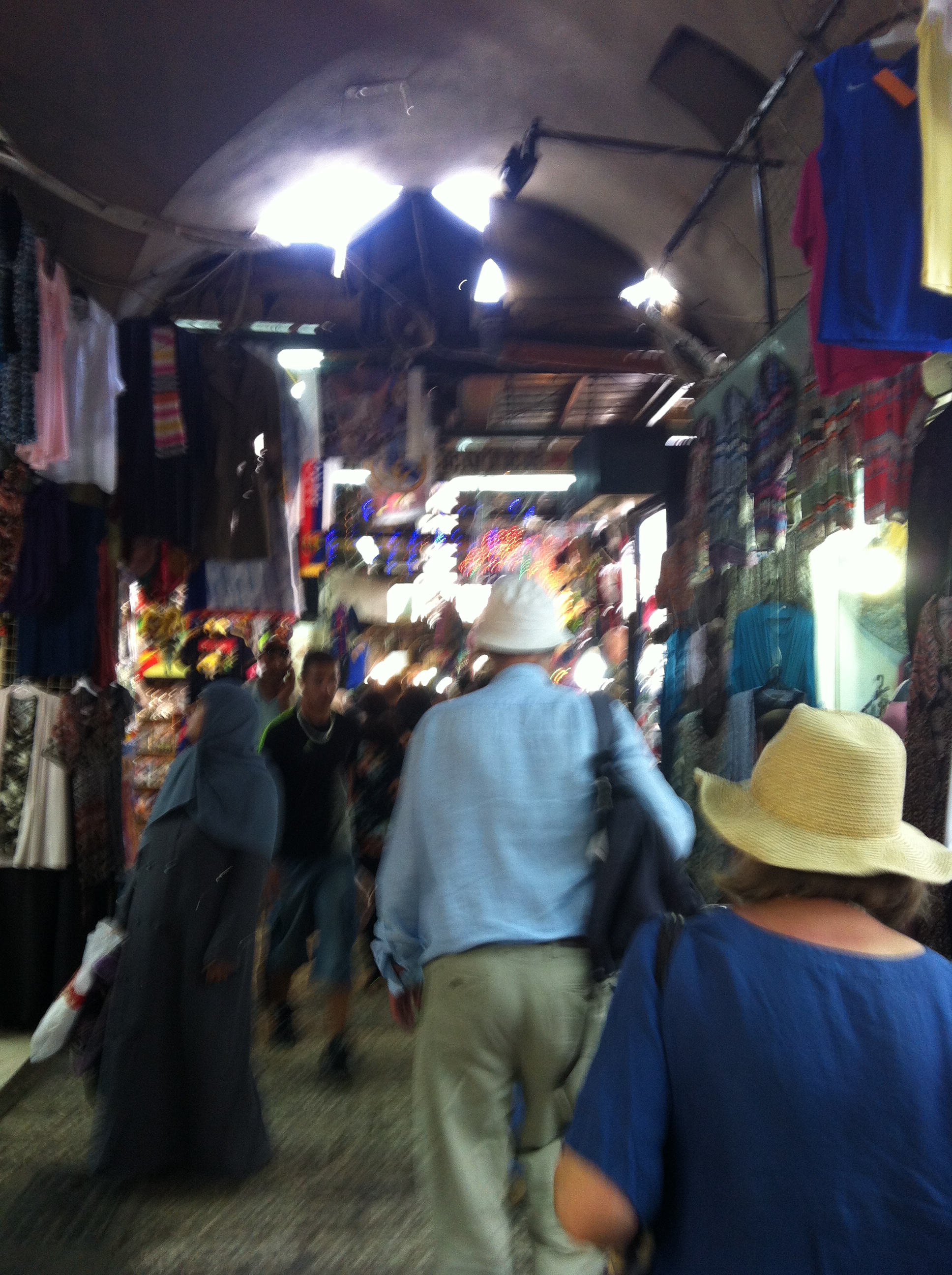
following most of the stations of the cross, where Jesus fell, met his mother and carried the cross to Golgotha. The close alleyways hemmed in by traders, jostled by carts and crowded by every nationality cannot have been so very different then , apart from the goods on sale perhaps – vine leaves and crosses fighting for space with Shaun the sheep and mobile phone covers.
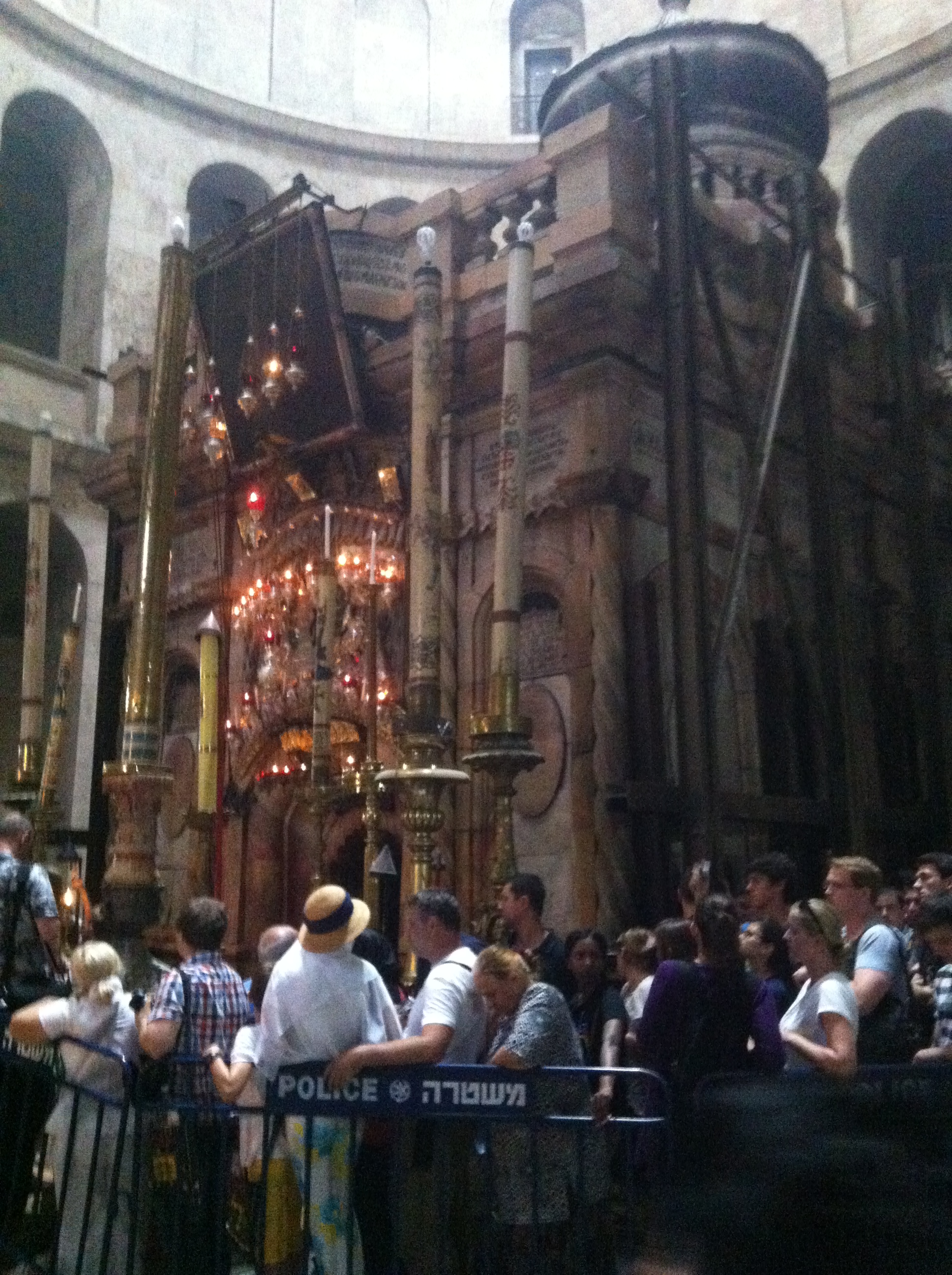
After a brief scare when we lost and found some fellow pilgrims we finally reached the Church of the Holy Sepulchre. Impossible to describe. This was a place of juxtapositions – between modest Byzantine columns and fortified Crusader columns, between garish brass lamps and charred stone hung with the accreted smell of incense, between solitary prayer and the 2hour queue of visitors for a brief glimpse of a recreated to
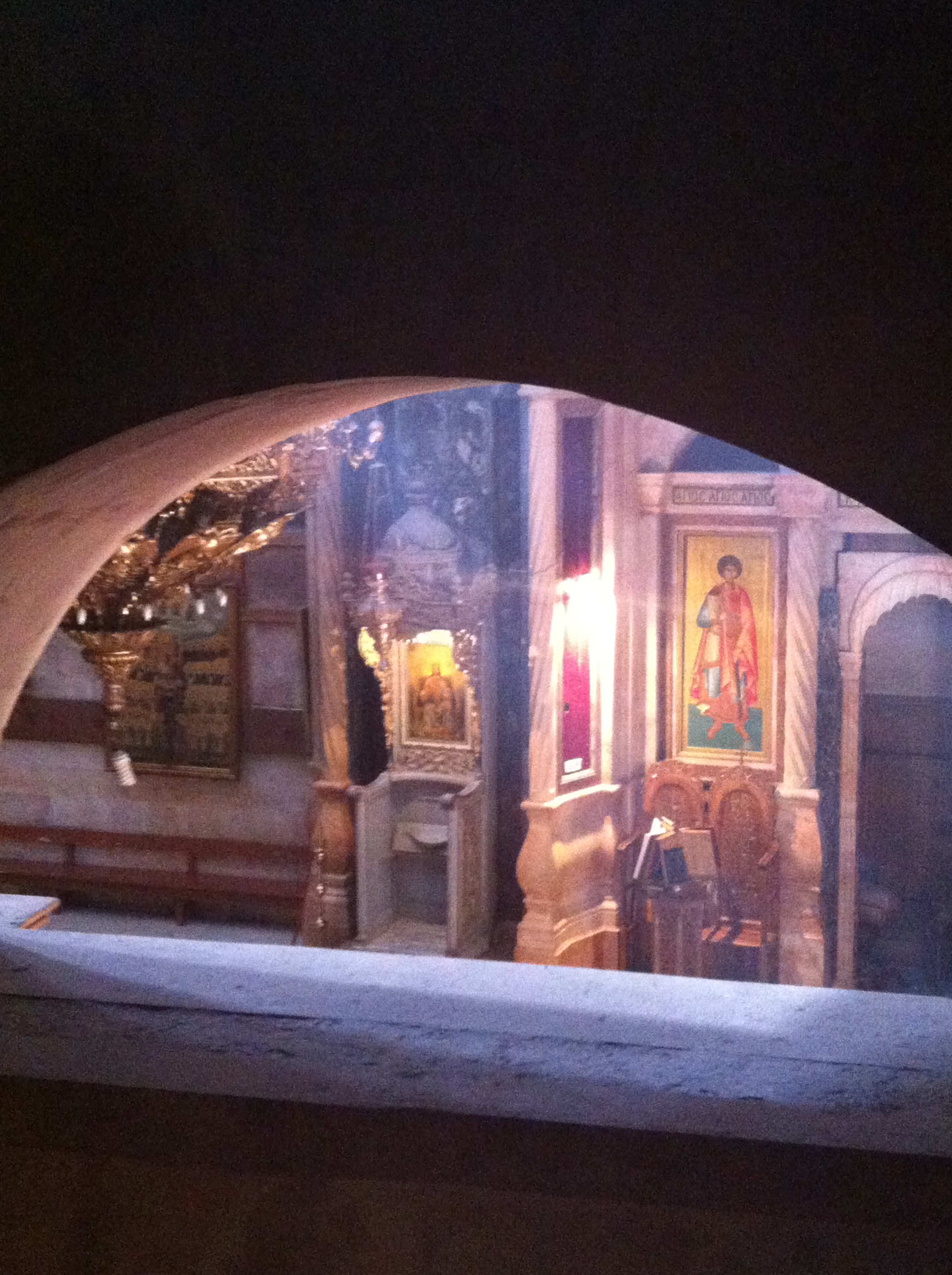
mb of Jesus.

We saw two ancient stone areas said possibly to have belonged to Joseph of Arimethea.
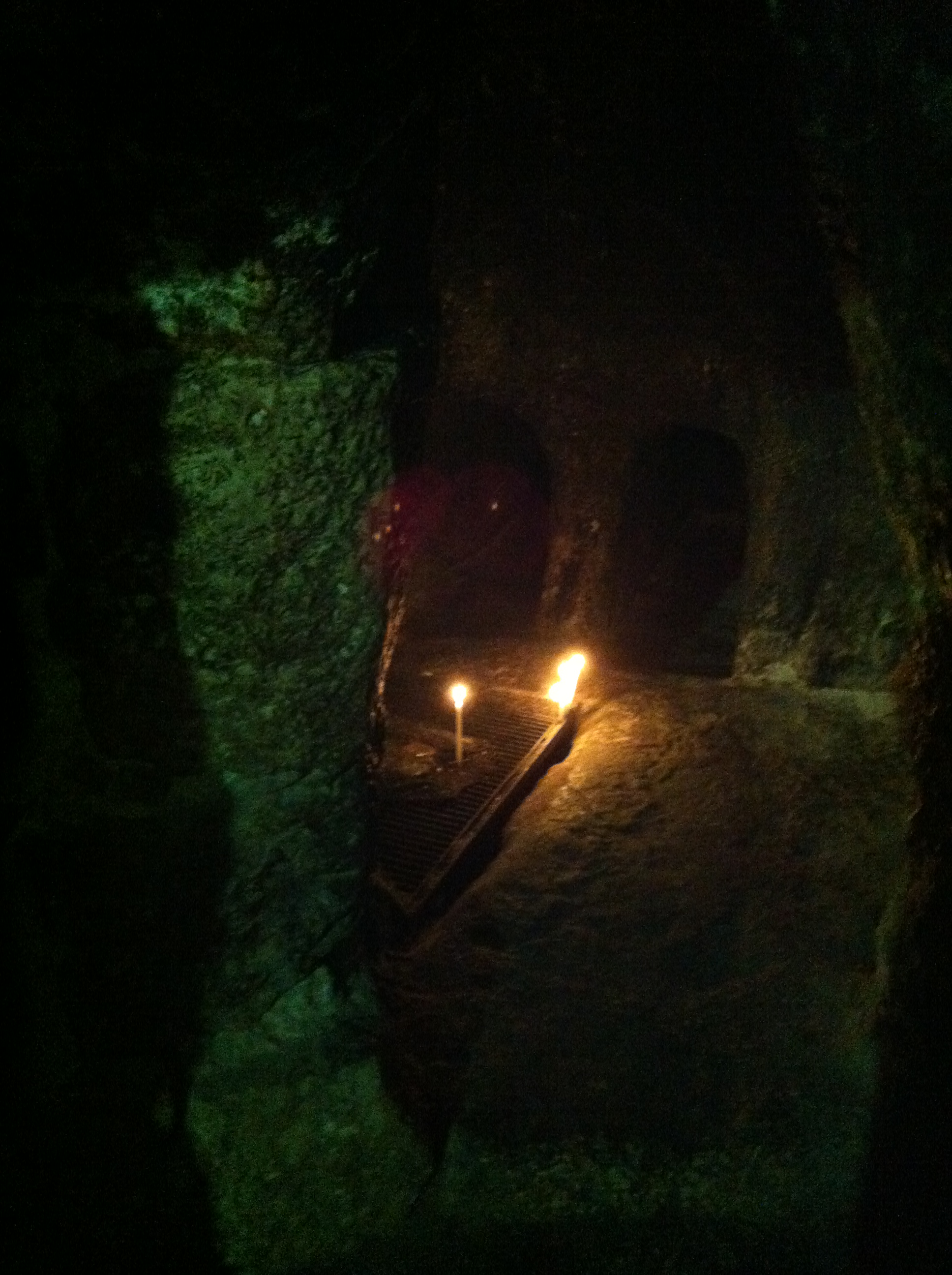
We saw shrines and sacred spaces dedicated to the Egyptian Coptic Christians, the Armenians, Greek Orthodox and more. What for me was the best sight was of all kinds of denim-dressed visitors from every nation crowding to light candles in this hot and holy place of history.
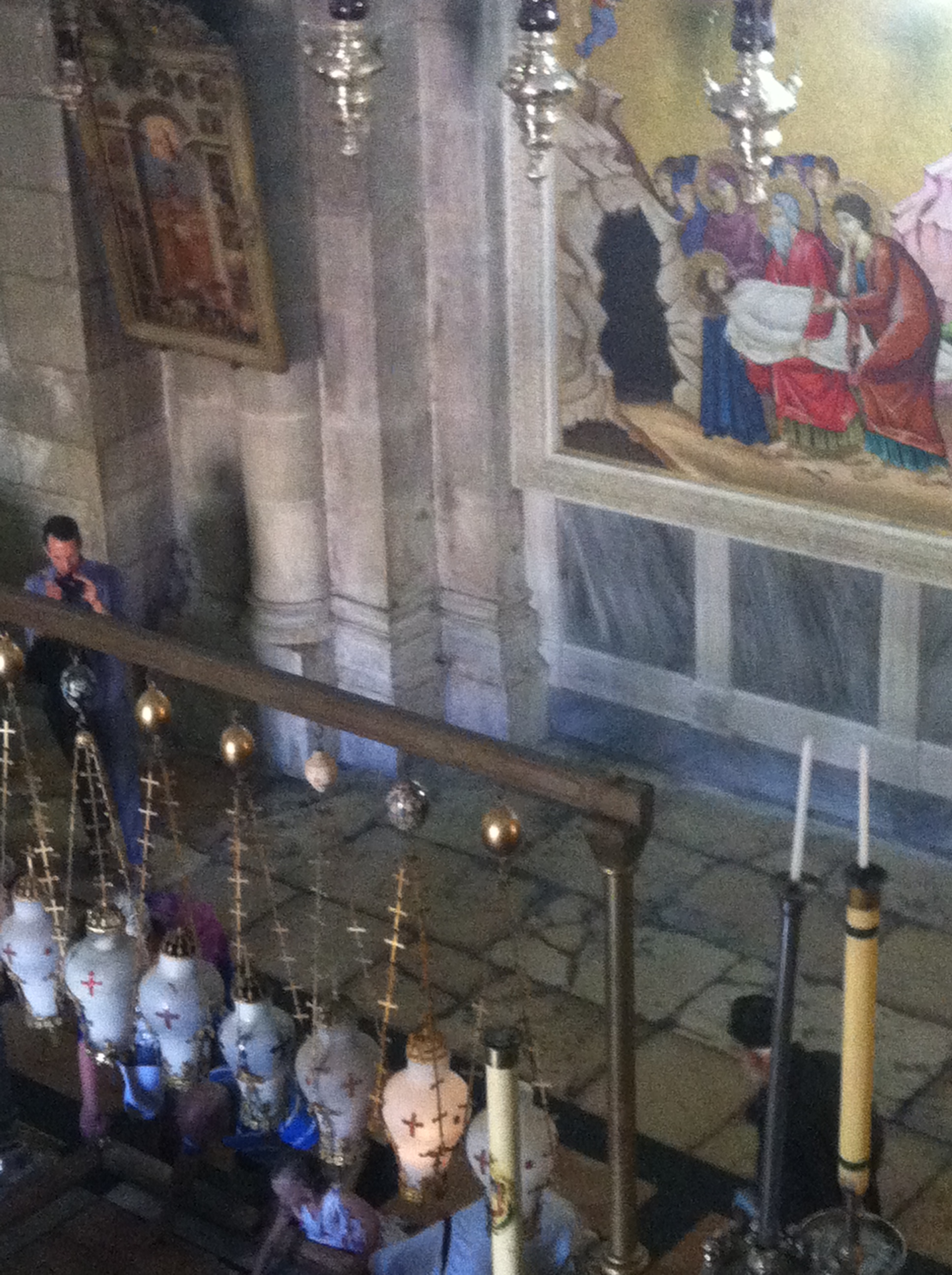
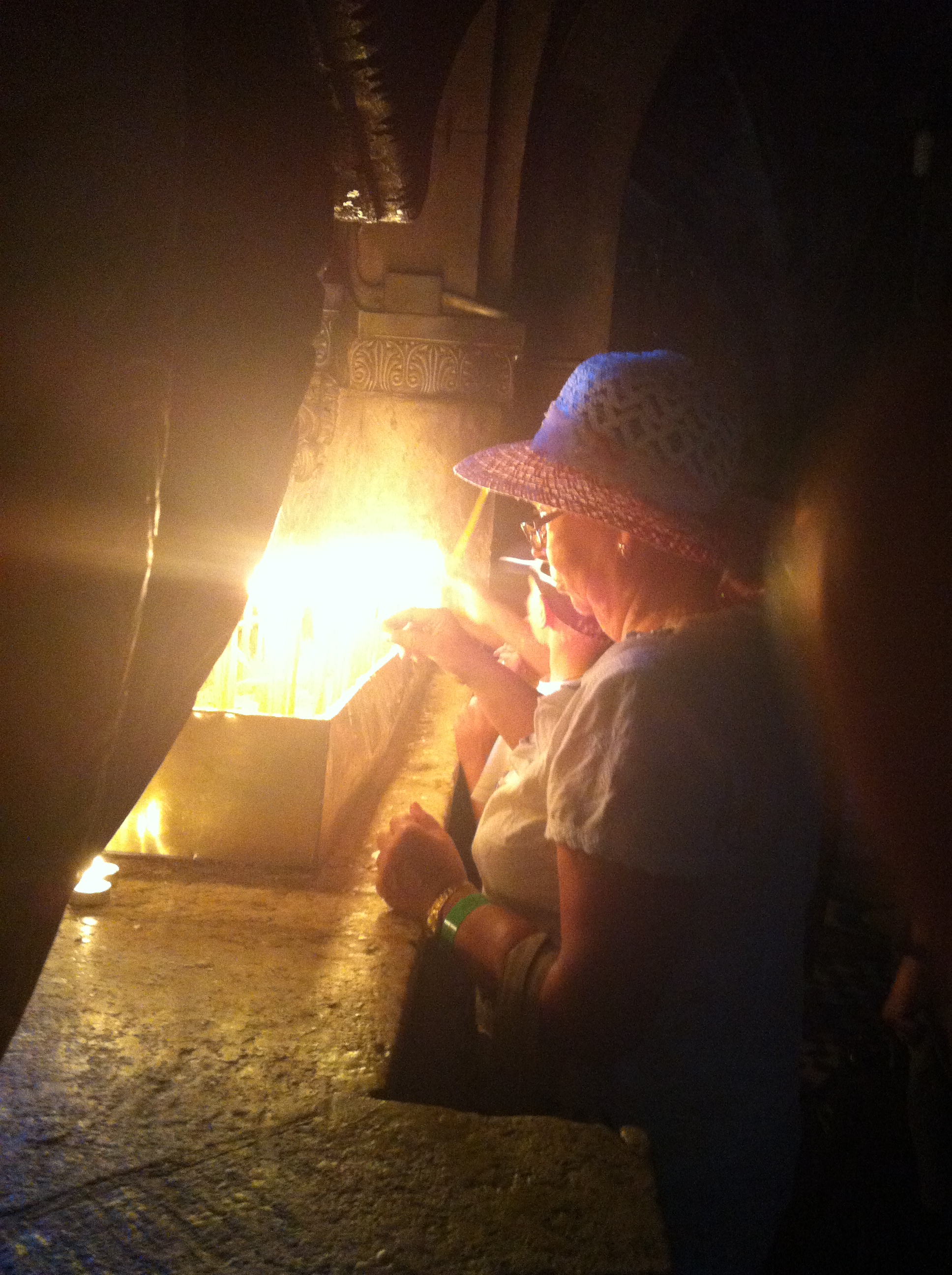
I sat and joined my prayers with the millions of others offered to God in this church of many churches.
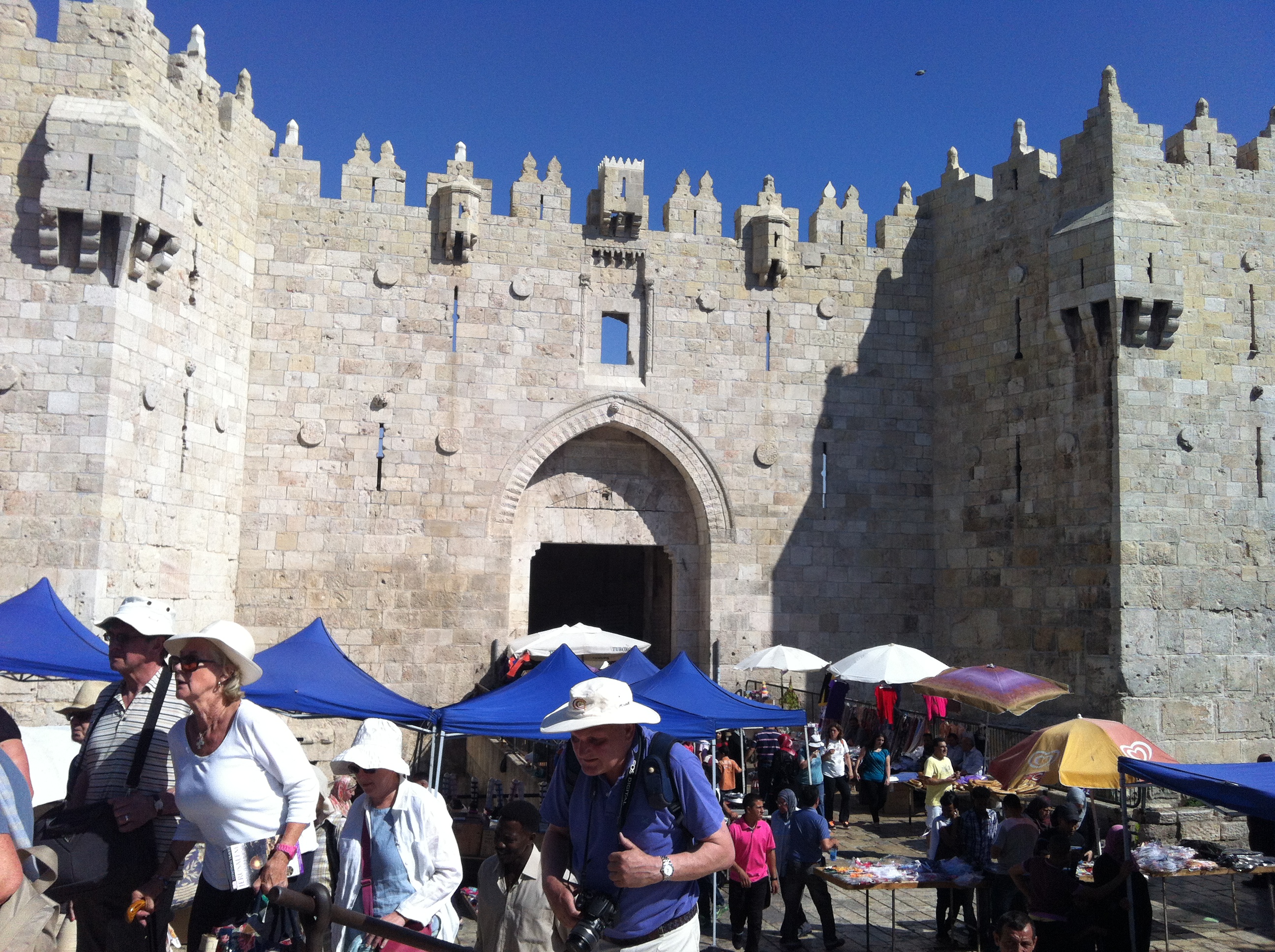
Exhausted pilgrims, we braved the sun again to return through the via Dolorosa to the Damascus Gate and, close by, the hotel.
 Learning to be Christian